
Welcome. If you've ever bought an option — or you're about to — you've run into a question that looks tiny but isn't: "Which expiration date do I pick?" There's a little dropdown menu, a list of dates, and no signpost telling a beginner which one is the "right" one. So most new traders click the cheapest, nearest date, feel clever for saving money, and then watch the trade fall apart even when they were right about the direction.
This guide fixes that. By the end, you'll understand exactly what an expiration date is, why buying more time costs more money, why the shortest expirations quietly destroy beginners, and how to give a trade enough room to actually work. We'll go slow, define every term, and walk through real-ish numbers you can follow with a calculator or just your eyes.
Let's start from zero.
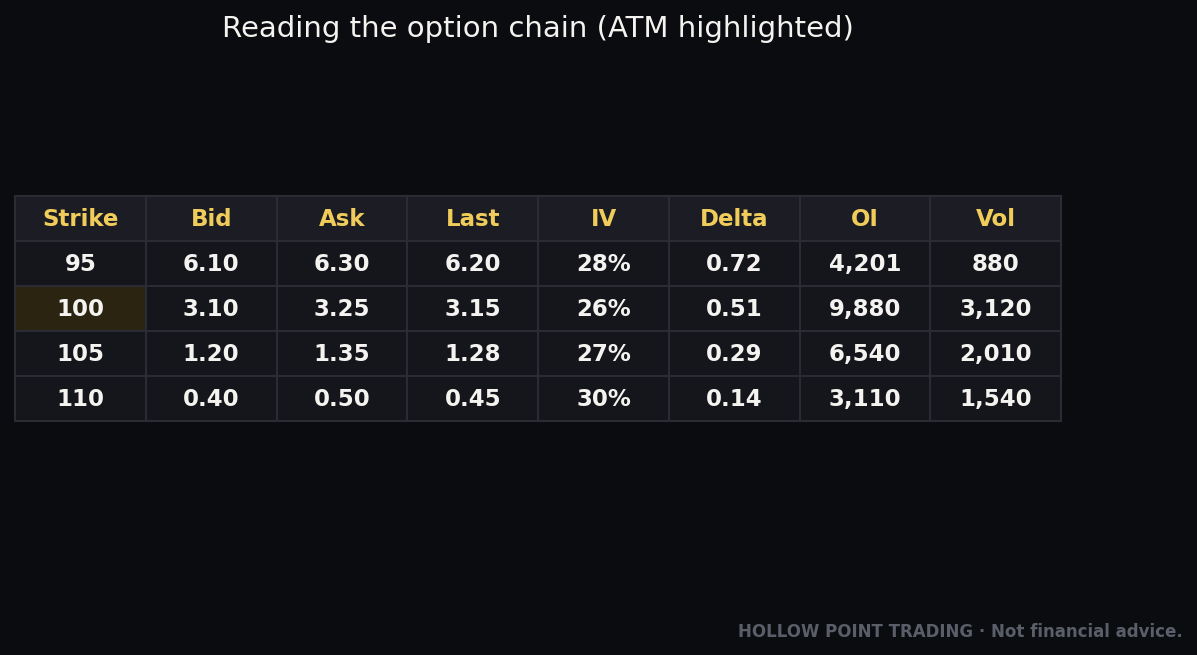
What an Expiration Date Actually Is (Plain English)
First, the ground floor. An option is a contract that gives you the right — but not the obligation — to buy or sell a stock at a set price, before a set date. That's it. You're not buying the stock itself; you're buying a ticket that lets you control the stock's movement for a while.
Two flavors:
- A call option profits when the stock goes up. Think of it as a bet (or a ticket) that says "this stock is heading higher."
- A put option profits when the stock goes down. It's the ticket that says "this stock is heading lower."
The strike price is the specific price your ticket is tied to. If you buy a call with a $100 strike, your option starts making real money once the stock climbs above $100.
And the star of today's show — the expiration date — is the deadline stamped on your ticket. It's the last day your option exists. After that date, the contract is gone. Either it was worth something and you (or your broker) cashed it in, or it expired worthless and disappeared like an unused concert ticket the day after the show.
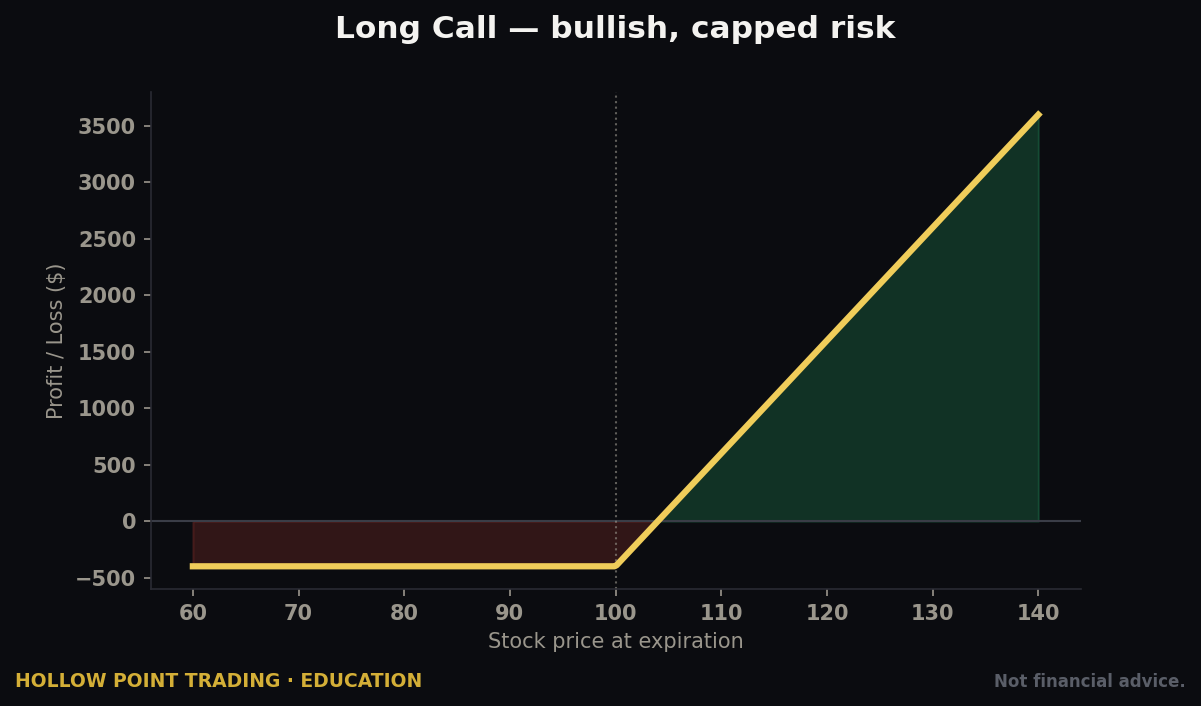
Here's the analogy that makes it click: an option is like a coupon with a deadline.
Imagine a coupon for $10 off a jacket that normally costs $100. If the jacket's price rises to $130, your coupon is fantastic — you get a $130 jacket for $120. But that coupon has an expiration date printed on it. If the jacket price hasn't moved by the time the coupon expires, the coupon is just a piece of paper. The whole game is: will the price move the way I want, before my coupon runs out?
The expiration date is how long your coupon lasts. And here's the thing beginners underestimate: the length of that deadline is one of the most important decisions in the entire trade. Pick a deadline that's too short, and you're right about the jacket but broke before it moves. Pick a comfortable deadline, and you give yourself room to be correct.
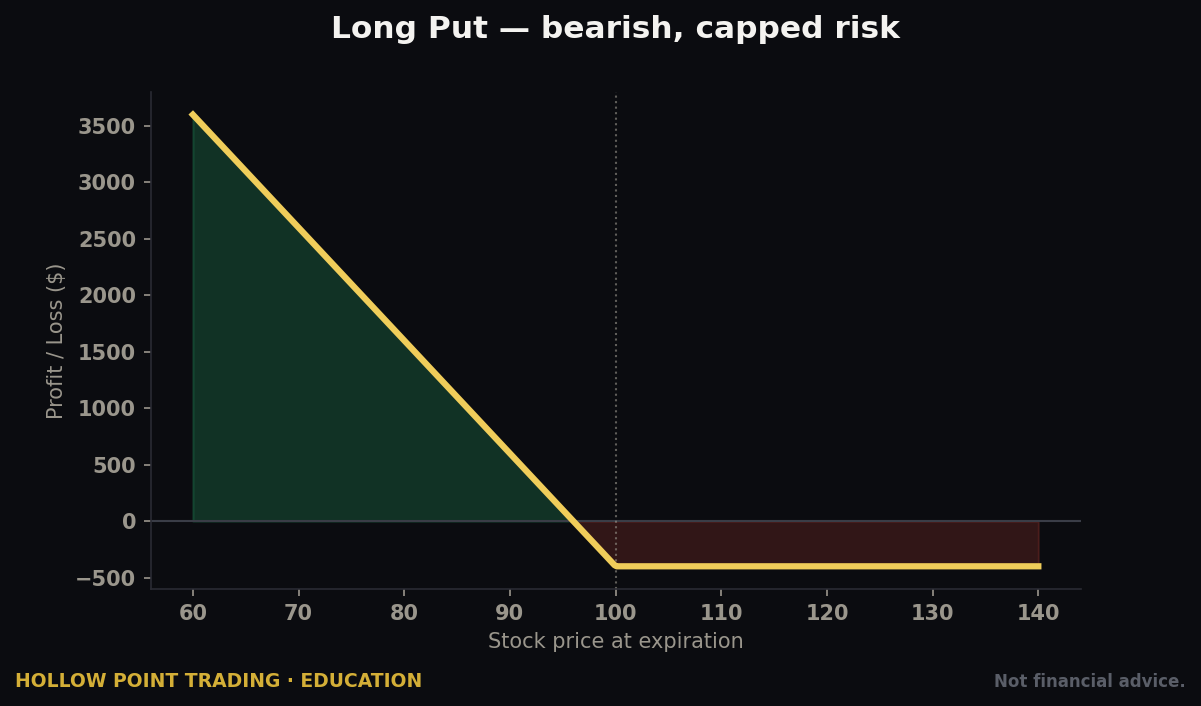
Weeklies vs. Monthlies: The Two Words You'll See Constantly
When you open that expiration dropdown, you'll see a wall of dates. Traders bucket them into two casual categories:
Weeklies — options that expire at the end of this week or within the next week or two. On big, popular stocks and indexes, expirations exist for nearly every Friday, and some (like SPY, QQQ, and the big indexes) even expire multiple days a week. A weekly is short-term. It's a coupon that runs out in days.
Monthlies — options that expire once a month, traditionally on the third Friday of each month. These have been around the longest, tend to have the most trading activity for that further-out date, and give you weeks or months of runway. A monthly is a coupon that lasts a good while.
You'll also hear about LEAPS — a fun acronym for long-dated options that expire a year or more away. Those are a topic for another day, but know they exist: they're the coupons that last a very long time.
So which do beginners reach for? Almost always weeklies — because they're cheap. And that cheapness is a trap we're about to dismantle. To understand why, we need to talk about the two ingredients baked into every option's price.
Why More Time Costs More Money (The Core Idea)
Every option's price is built from two parts. Learn these two words and you're ahead of most beginners:
1. Intrinsic value — the "real, right-now" value. If a stock is at $105 and you own a $100 call, that option has $5 of intrinsic value, because the right to buy at $100 something worth $105 is genuinely worth $5. If the stock is below your strike, intrinsic value is zero.
2. Extrinsic value (a.k.a. time value) — the "hope and possibility" part. This is the extra money you pay for the chance that the stock moves further in your favor before expiration. It's literally the price of time and uncertainty.
Here's the key insight: the more time until expiration, the more extrinsic (time) value the option carries. More days on the clock means more chances for the stock to move your way — so that possibility is worth more, and you pay more for it.
Think about our coupon again. A $10-off coupon that's good for six months is more valuable than the exact same coupon that expires tomorrow. Why? Because six months gives the jacket lots of time to go on sale, rise in price, whatever helps you. Tomorrow gives it almost none. Same coupon, same discount — but time itself has value, and you pay for it.
Let's put simple numbers on it. Say a stock trades at exactly $100, and you're looking at a $100 call (right at the money). Roughly:
- The call expiring in 3 days might cost $0.80 (that's $80, since one contract controls 100 shares).
- The call expiring in 3 weeks might cost $2.20 ($220).
- The call expiring in 2 months might cost $4.00 ($400).
- The call expiring in 6 months might cost $7.50 ($750).
Notice the shape: none of these have any intrinsic value (the stock is exactly at the strike, not above it). Every single dollar is time value. The longer the deadline, the more you pay — purely for time. A beginner sees the $80 weekly next to the $750 six-month option and thinks, "Obviously I'll take the $80 one, it's practically free!" That instinct is exactly backwards, and here's why.
Theta: The Melting Ice Cube Every Beginner Must Understand
Time value doesn't just sit there. It shrinks a little every single day, whether the stock moves or not. This daily bleed is called theta (say it "THAY-tuh"), and it's the single most important concept in this entire guide.
Picture your time value as an ice cube. Every day it sits out, it melts a little. On a hot day (near expiration), it melts fast. On a cold day (far from expiration), it melts slowly.
Here's the cruel part that traps beginners: an option doesn't melt evenly. Time decay accelerates as expiration approaches. An option with two months left loses its time value slowly, gently — it barely melts day to day. But an option with three days left melts violently. The last week of an option's life is a bonfire for time value.
Let me show you with our at-the-money numbers. Watch what happens to a weekly call worth $0.80 as the days tick by, assuming the stock doesn't move at all:
- 3 days left: worth $0.80
- 2 days left: worth $0.55
- 1 day left: worth $0.28
- Expiration morning, stock still at $100: worth $0.02 — basically nothing.
You were right that the stock would stay strong. You did nothing wrong on direction. And you still lost almost your entire $80, because the ice cube melted before the stock could reward you. That is the beginner's nightmare, and it happens thousands of times a day to people who bought "the cheap one."
Now compare the two-month call. Over those same three days, with the stock sitting still, it might drift from $4.00 down to maybe $3.85. It barely melted. It's patient. It gives the stock time to do something. That patience is exactly what you paid the extra money for — and it's exactly what a beginner needs.
The one-sentence version: Short expirations are cheap because they're supposed to expire worthless. You're not getting a deal. You're renting a melting ice cube on a hot day.
Why Beginners Should Avoid Too-Short Expirations
Let's be blunt about the pitch weeklies make and why it's a siren song for new traders.
The trap: Weeklies are cheap, so they feel low-risk. "It's only $50, what's the worst that happens?" The worst that happens is you lose 100% of it, repeatedly, and it adds up fast. Cheap does not mean safe. Cheap means unlikely to work.
Here are the specific reasons short expirations punish beginners:
1. You need to be right about direction AND timing AND speed — all at once. With a weekly, the stock doesn't just have to go your way. It has to go your way this week, and fast enough to outrun the melting ice cube. Being right "eventually" is worthless. Markets rarely move on your schedule. Longer expirations forgive imperfect timing; short ones demand perfection you don't have yet.
2. The decay is brutal and constant. As we saw, that final week is a bonfire. You wake up, the stock is flat, and your option is worth 30% less than yesterday for no reason you can see. Beginners find this psychologically devastating — they panic-sell, revenge-trade, and blow through their account not because they were wrong, but because they picked a contract designed to melt.
3. Whipsaws wipe you out before the real move. Stocks don't travel in straight lines. A stock heading to $110 might dip to $97 first, scaring you, before it ever climbs. With a weekly, that dip and the melting clock can zero out your option before the stock ever gets going. You called the destination correctly and still lost everything because you had no room to breathe.
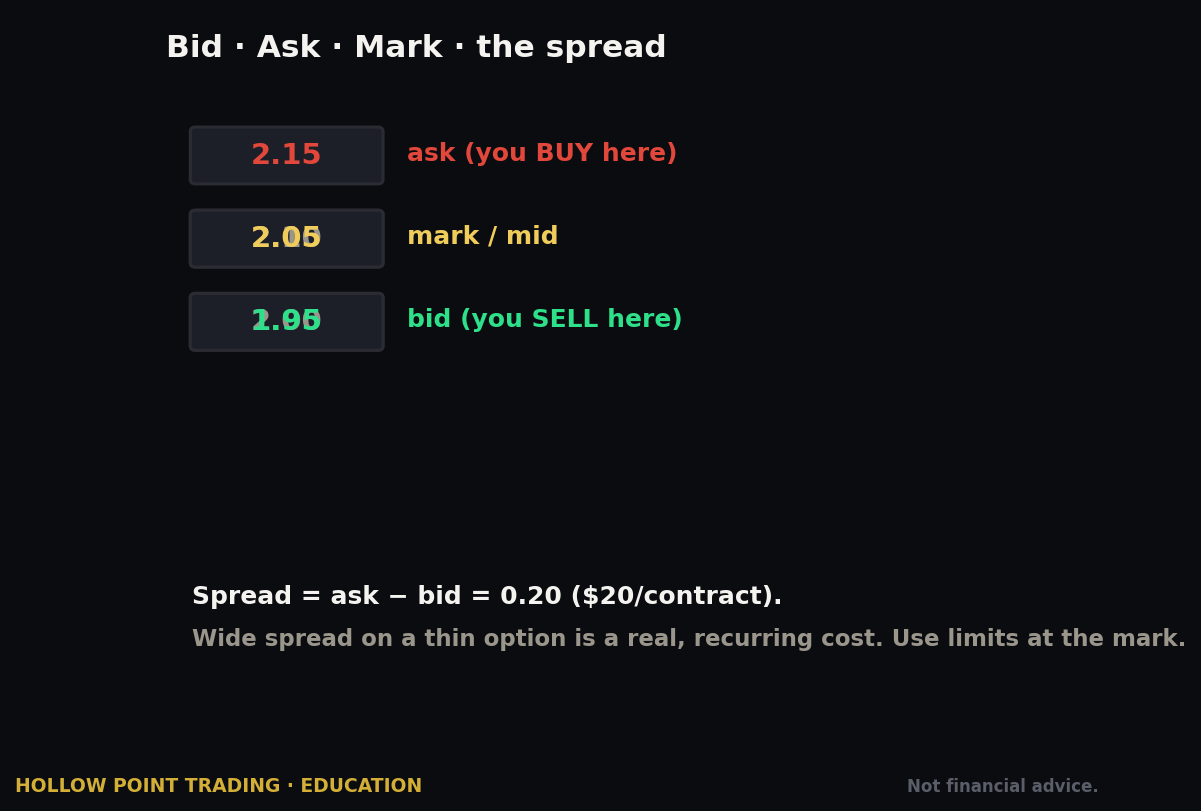
4. The math is stacked against frequent short-term buyers. Every trade has costs — the gap between the buy price and sell price (the bid-ask spread), plus the relentless theta. When you buy short-dated options over and over, those costs compound. You can be right half the time and still bleed out.
None of this means weeklies are "bad" in some absolute sense — experienced traders use them deliberately for specific, fast setups. But as a beginner, buying too-short expirations is one of the fastest ways to lose money while feeling like you did everything right. Give yourself time. It's the cheapest edge you'll ever buy.
Giving Your Trade Room to Work
Here's the mindset shift that separates beginners who survive from beginners who don't: you are not buying a lottery ticket for tomorrow. You are giving a well-reasoned idea enough runway to prove itself.
When you think a stock is going to move, ask honestly: How long will that take? Not "how long do I hope," but a realistic estimate. If your read is "this stock should climb over the next couple of weeks as the sector heats up," then a three-day option is absurd — you've given a two-week idea a two-day deadline. You've guaranteed a mismatch.
A good rule of thumb for beginners: buy at least two to three times more time than you think you need. If you expect the move to play out in a week, buy a month. If you expect two weeks, buy two months. That extra time is your buffer against dips, delays, and the melting clock. It costs more up front, but it dramatically raises the odds that you're still in the trade when your idea pays off.
This buffer does three things:
- It slows the theta bleed — remember, further-out options melt slowly, so a flat day doesn't gut you.
- It survives the whipsaw — the stock can dip against you and recover, and you're still holding.
- It removes timing pressure from your decisions — you make calmer choices when you're not watching an ice cube melt by the minute.
There's a beautiful side effect here. When you're not fighting the clock, you can actually manage the trade with discipline — take profits at your target, cut losses at your stop — instead of making frantic decisions driven by decay. Room to work isn't just about the option. It's about protecting you from yourself.
A Fully Worked Beginner Example
Let's walk through one complete trade, slowly, so you see every piece fit together. We'll use round, realistic numbers.
The setup. Imagine a stock — call it BRVO — trading at $100. You've done your homework: the overall market looks healthy, BRVO's sector is strong, and BRVO itself just bounced off a level it's respected before. Your read: "I think BRVO grinds up toward $110 over the next few weeks." Good. Notice you have a direction (up), a target ($110), and a rough timeframe (a few weeks). You need all three before you ever touch the expiration dropdown.
The wrong beginner move. You see a call option with a $100 strike expiring in 4 days for $0.90 ($90). "Cheap! If BRVO hits $110 I'll make a fortune." You buy ten of them for $900 because they're so cheap. Feels smart. It isn't. You've given a few-weeks idea a four-day deadline.
What happens: BRVO opens flat the next day at $99.50 — a totally normal wiggle. Your options drop to $0.55. Day two, still hovering at $100, they're at $0.30 — the ice cube is melting hard now. Day three the stock ticks up to $101, but your options are only worth $0.35 because decay ate the gains. Day four (expiration), BRVO closes at $101.20. Your $100 calls are worth just their intrinsic value, about $1.20... wait, that's actually a profit? Sometimes — if it finishes above your strike at the buzzer. But if BRVO had closed at $99.80 instead (twenty cents away), your options expire worthless and you lose the entire $900. Your fate hinged on twenty cents on one specific afternoon. That's not investing. That's a coin flip you paid for.
The disciplined move. Instead, you look further out. You pick the $100 call expiring in about 7 weeks (a monthly, third Friday). It costs $4.50 ($450 per contract). Pricier per contract, so you buy fewer — maybe two contracts for $900 total, the same money at risk. This is key: you didn't spend more, you just bought time instead of quantity.
Now watch the same messy real-world path unfold:
- Day 1: BRVO dips to $99.50. Your options barely flinch — down to about $4.30. No panic.
- Week 1: BRVO chops between $98 and $101. Your options drift to ~$4.10. The slow melt is gentle; you're comfortable.
- Week 3: The sector catches fire. BRVO climbs to $105. Your $100 calls are now worth about $6.80 — you have $5 of intrinsic value plus leftover time value.
- Week 5: BRVO reaches your $110 target. Your calls are worth roughly $11.00.
You bought two contracts at $4.50 ($900). They're now worth $11.00 each — $2,200. You take your profit at your target, like a disciplined trader, and walk away with roughly $1,300 in gains on your $900 risk. That's better than a 1-to-1.4... but wait — let's be honest, that's the whole position. The point isn't the exact figure. The point is this: the longer expiration let you survive the dip, ignore the chop, and still be holding when your idea came true. The weekly buyer, with the identical correct read on BRVO, was already wiped out by Wednesday.
Same analysis. Same stock. Same direction. Wildly different outcome — decided entirely by which expiration you clicked.
The Beginner Mistakes to Avoid
Let's collect the landmines in one place so you can memorize them.
Mistake 1: Buying the cheapest expiration because it's cheap. Cheap options are cheap for a reason — the market is telling you they'll probably expire worthless. Price is not the same as value. Stop shopping for the lowest sticker.
Mistake 2: Ignoring theta entirely. If you don't know what your option loses per day, you're flying blind. Always glance at how fast the ice cube is melting before you buy.
Mistake 3: Matching a long-term idea to a short-term option. If you think a move takes three weeks, a three-day option is a self-inflicted wound. Match the expiration to your actual expected timeframe — then add a buffer.
Mistake 4: Buying more contracts because they're cheap, instead of more time. Ten weekly lottery tickets feel exciting. Two patient monthlies are far more likely to pay. Spend your fixed risk budget on time, not quantity.
Mistake 5: Buying an expiration that lands right before or after a known event without understanding it. Earnings reports, Fed meetings, and other scheduled events can make short options behave strangely and expensively. As a beginner, don't buy a weekly that expires the day after earnings unless you deeply understand what you're doing. Give events room, too.
Mistake 6: Holding a short option into its final hours hoping for a miracle. The last day is pure chaos and pure decay. Beginners should generally not be white-knuckling zero-day options praying for a bounce. If you gave yourself time, you'll rarely be in this spot.
Mistake 7: Confusing "I was right" with "I made money." You can be perfectly right on direction and still lose everything if your expiration was too short. Being right is necessary but not sufficient. Time is the bridge between a correct idea and an actual profit.
Your Simple Expiration Cheat-Sheet
Tape this to your monitor. Before you buy any option, run through it:
Step 1 — Know your three things first. Direction (up = call, down = put), a target price, and a realistic timeframe for the move. If you can't state all three, you're not ready to pick an expiration.
Step 2 — Estimate how long your idea needs. Days? A week? A month? Be honest, not hopeful.
Step 3 — Multiply that by 2 or 3. That's your minimum expiration. Idea needs a week? Buy a month. Idea needs two weeks? Buy six-to-eight weeks.
Step 4 — Default to monthlies as a beginner. Third-Friday monthly options are your friend: slower decay, more trading activity, more forgiveness. When in doubt, go monthly.
Step 5 — Avoid anything expiring in under ~2 weeks until you genuinely understand theta and have practice. Especially avoid same-day and next-day expirations.
Step 6 — Check for events. Is there an earnings report or major announcement before your expiration? If yes and you don't fully understand the impact, pick a different date or skip the trade.
Step 7 — Buy time, not quantity. Fixed risk budget → fewer contracts with more time beats more contracts with less time.
Step 8 — Set your exit before you enter. Know your profit target and your stop. Time gives you room; discipline uses it.
Quick reference on the two categories:
| Weeklies | Monthlies | |
|---|---|---|
| Time to expiration | Days to ~2 weeks | Several weeks to months |
| Cost | Cheaper | Pricier |
| Theta (decay) | Fast, brutal | Slow, gentle |
| Forgiveness for bad timing | Almost none | Lots |
| Best for | Experienced, fast setups | Beginners |
How This Fits the Bigger Hollow Point Picture
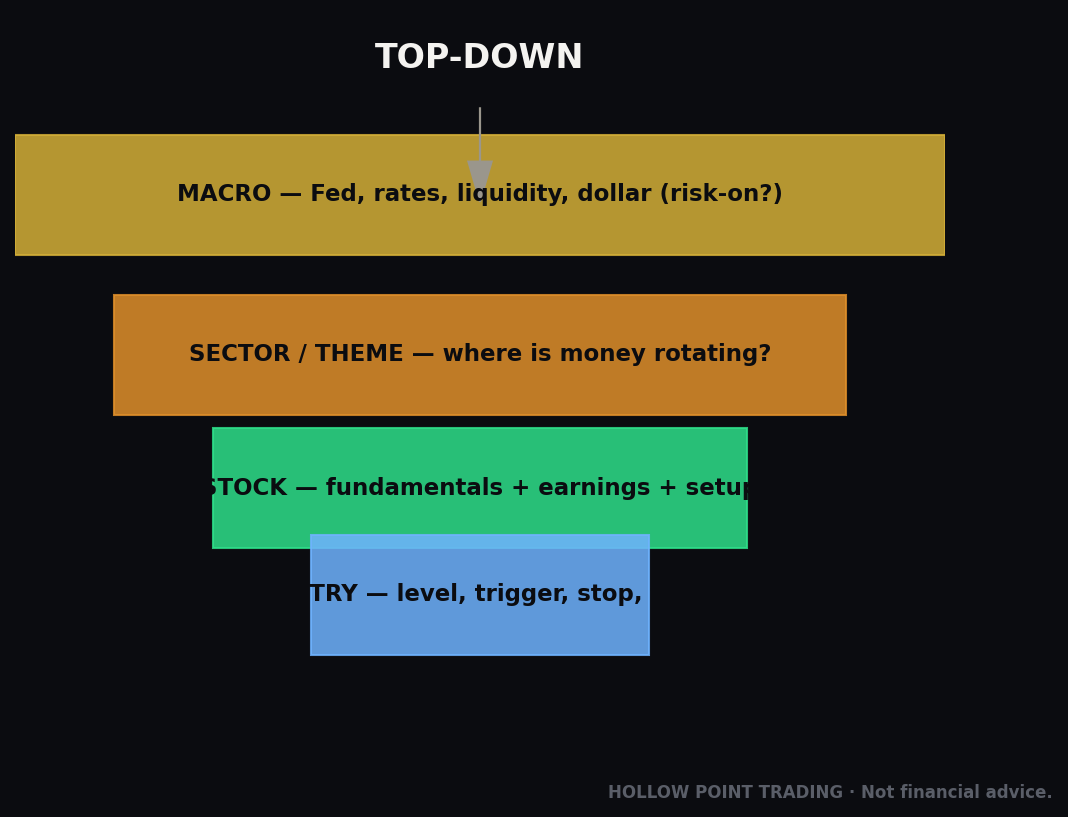
At Hollow Point Trading, everything flows from a simple order of operations: macro → sector → stock. You start by asking what the whole market is doing, then whether the sector is in favor, then whether the individual stock has a clean setup. Only when those three line up do you have a trade worth taking.
Picking an expiration is where that patience meets reality. All that careful top-down work is wasted if you staple your well-reasoned idea to a three-day fuse. The expiration date is where discipline either protects your analysis or throws it away.
Notice how naturally this connects to the HPT core belief: discipline over prediction. You will never perfectly predict when a move happens — nobody can. So instead of pretending you can time it to the day, you build in a margin of safety with time. Giving a trade room to work is the same instinct as protecting capital first: you're not reaching for the flashy, cheap, high-odds-of-zero lottery ticket. You're structuring the trade so that being right actually gets paid.
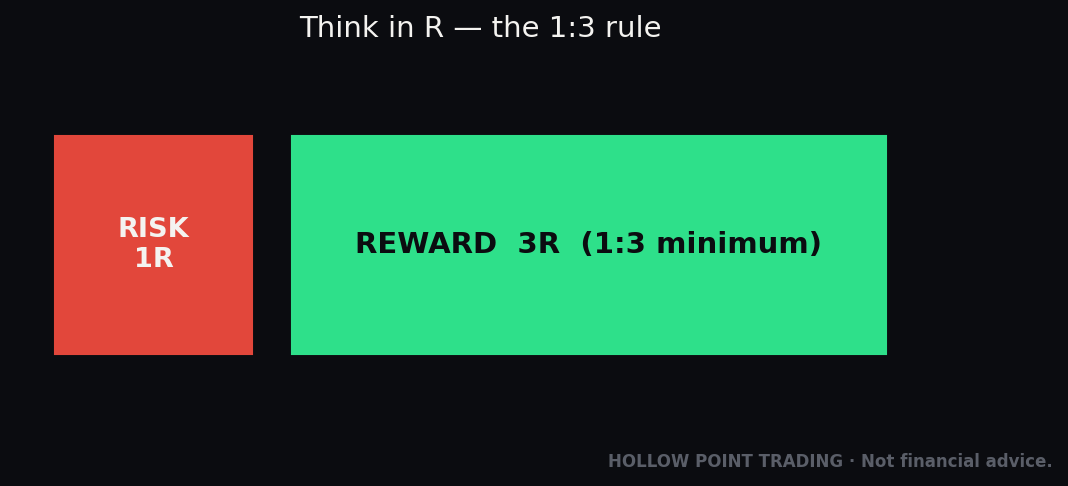
It even ties back to reward-to-risk. HPT looks for setups around 1-to-3 — risking one dollar to make three. You simply cannot achieve a clean 1-to-3 on a melting weekly that decays 30% overnight; the clock steals your reward before the stock delivers it. A patient expiration keeps your reward intact so the 1-to-3 math can actually happen. Time isn't a side detail. It's part of the risk management.
So here's your takeaway, the thing to carry into Monday: cheap short options aren't a bargain — they're a countdown. Buy yourself time. Match the expiration to your real timeframe, then add a buffer. Default to monthlies while you learn. Spend your risk budget on runway, not on quantity. Do that, and you'll stop losing trades you were right about — which, for a beginner, is the most expensive lesson there is, and now you get to skip it.
Protect your capital. Give your ideas room. Let the clock be your friend instead of your executioner.
Bound by rules, feared by trade.