
You tap buy. A price appears. Shares are yours. It feels instant, clean, and simple — like the market reached out and handed you exactly what the screen promised.
It isn't simple. In the roughly 200 milliseconds between your tap and your confirmation, your order was routed, auctioned, matched, and printed through a system most traders never see and half the internet gets wrong. There are market makers quoting both sides. There are wholesalers paying your broker for the right to fill you. There's a national best price you're legally owed — and dozens of private venues where the biggest trades happen in the dark, off the tape, until they're already done.
This is the plumbing. And here's the thing about plumbing: you don't need to be a plumber to use a sink, but if you understand where the water goes, you stop panicking every time a pipe knocks. Most retail fear about "the market makers hunting my stops" or "dark pool manipulation" comes from not understanding the mechanism. Once you see it, the fear turns into information. You start reading the flow instead of imagining a conspiracy.
There's a bigger reason to care than just calming your nerves. Every edge you build on the chart — every clean level, every 12/22/55 stack, every 1:3 setup — gets spent or preserved at the moment of execution. Traders spend years perfecting the read and then quietly hand back a third of their expected return through spreads they never measured, market orders they never should have used, and slippage they blamed on "the algos." The plumbing is where paper edges become real money or evaporate. Learning it is not trivia. It's the last, most-ignored skill in the stack.
Let's open the walls and look at the pipes.
The Concept: A Market Is Just a Continuous Auction
Strip everything away and a stock exchange is an auction that never stops. At any instant there are buyers posting the highest price they'll pay — the bid — and sellers posting the lowest price they'll accept — the ask (also called the offer). The gap between them is the spread.
That's the whole game at its core: bids on one side, asks on the other, and a transaction whenever the two agree on a price. Everything else — market makers, dark pools, payment for order flow — is machinery built to make that auction faster, deeper, and more profitable for the people running it.
Two terms to lock in now, because the rest of this piece leans on them:
Liquidity is how easily you can trade size without moving the price. A deep, liquid stock (think SPY or AAPL) lets you buy thousands of shares and barely nudge the quote. A thin one (a small-cap biotech) moves a dime if you sneeze.
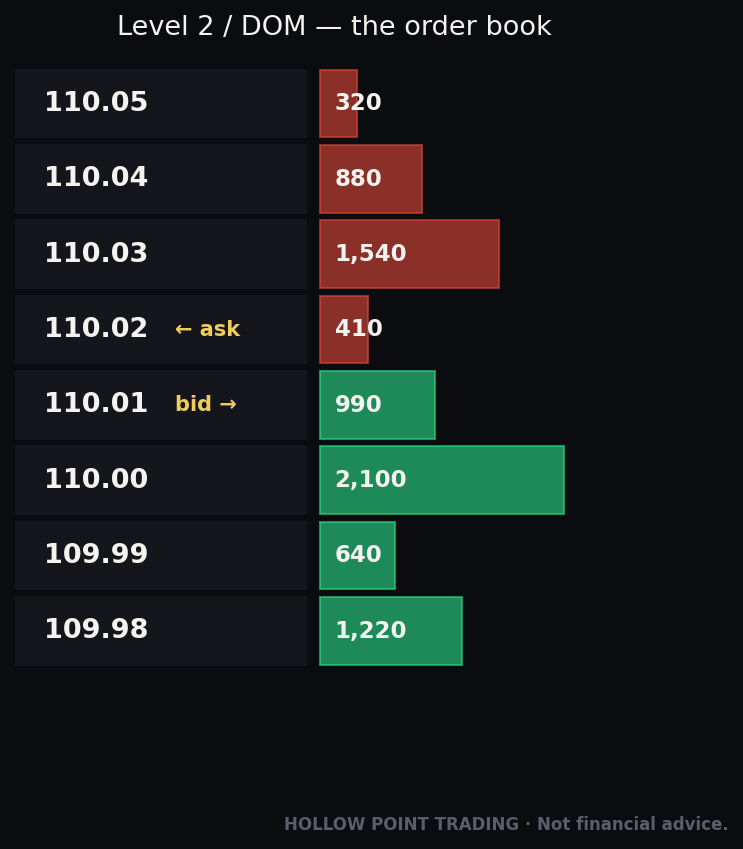
Order book (also called the depth of market or DOM) is the stacked list of all resting bids and asks at each price level. It's the auction, frozen and visible: how many shares want in at every price, above and below the current print.
When people say "the market," they usually mean the last traded price — a single number crawling across the screen. But that number is just the most recent handshake in a live, breathing auction. The real market is the book underneath it. Learn to think in terms of the book, and the plumbing starts making sense.
Two order types, and why the difference is everything
Before we go deeper, nail the distinction that separates traders who keep their edge from traders who leak it.
A market order says: fill me right now, at whatever price the book offers. It guarantees execution but not price. You are the one crossing the spread — reaching over to hit the resting ask when you buy, or the resting bid when you sell. You take liquidity. In the microstructure vocabulary you are a liquidity taker, and you pay for the privilege of immediacy.
A limit order says: fill me only at this price or better. It guarantees price but not execution. If you post a buy limit at $14.25 and nobody sells to you there, you sit unfilled. When your limit rests in the book waiting, you are providing liquidity — you're a maker, and on some venues you'd even be paid a small rebate for it.
Everything downstream — spreads, slippage, price improvement, why your fills sometimes surprise you — traces back to whether you took or provided liquidity on that specific order. Hold that fork in your head. We'll come back to it constantly.
Where the last price actually comes from
The number ticking across your screen is the price of the most recent completed trade — one handshake, already history. It tells you nothing about how much size stood behind it or what's waiting on either side right now. A print of $88.00 could be a 100-share retail buy lifting a thin offer, or the tail end of a 300,000-share institutional sweep. Same number, wildly different meaning.
This is why professionals watch the book and the tape, not just the last price. The book shows what's resting (intent that hasn't traded yet). The tape — time and sales — shows what actually executed, at what price, in what size, and increasingly with a venue code telling you where. The last price is the shadow the auction casts. The auction itself is the thing worth reading.
The Mechanism, Part 1: What a Market Maker Actually Does
A market maker is a firm that commits to quoting both a bid and an ask in a security, continuously, and to trading against you at those prices. They are the always-on counterparty. When you want to buy and no other trader happens to be selling at that exact instant, the market maker sells to you out of their own inventory. When you want to sell, they buy — even if they don't especially want the shares.
Why would anyone volunteer to always be the other side? Because they get paid for it, and the payment is baked into the spread.
Say a market maker quotes AAPL at $230.10 bid / $230.12 ask. They're advertising: I'll buy from you at $230.10, I'll sell to you at $230.12. If one trader sells to them at $230.10 and another buys from them at $230.12 a half-second later, the maker pockets two cents per share — for providing the convenience of an instant fill to both. That two cents, multiplied across millions of shares a day, is the business.
The two enemies: inventory risk and adverse selection
The market maker's real enemy isn't you. It's inventory risk and adverse selection. Inventory risk: if they buy your shares and the stock immediately drops, they're holding a loss. Adverse selection: if the person selling to them knows something — an informed institution dumping ahead of bad news — the maker is systematically trading against smarter money. Their entire craft is managing those two dangers: quoting wide enough to get paid, tight enough to win the flow, and constantly hedging their inventory so a sudden move doesn't wipe out a week of penny-scalping.
Walk through the inventory problem concretely. Suppose a maker quoting our AAPL example gets hit repeatedly on the bid — buyers of their offer are scarce, but sellers keep hitting $230.10. Within a minute they've accumulated 40,000 shares they didn't want. Now they're long into what might be a slide. Two things happen. First, they skew their quote: they drop their bid to $230.08 and their ask to $230.11, nudging the whole quote down to discourage more sellers and attract buyers to relieve them. Second, they hedge — selling S&P futures, or an ETF, or a correlated name — so that if AAPL keeps dropping while they hold inventory, the hedge offsets the bleed. The quote you see move is often not an opinion about AAPL's fair value. It's a firm managing a warehouse.
This is why spreads widen in fast markets, around news, and near the open and close. The maker isn't punishing you. They're pricing in the risk that the next order carries information they don't have. A wide spread is a market maker saying "I'm nervous." That's a readable signal, not an attack.
What "quote skew" tells you on the tape
Because skewing is real, you can sometimes read maker positioning off the quote itself. If a name is pinned at a level and the offer keeps refreshing thicker than the bid — every time buyers eat the ask, a new equal-size ask reappears instantly while the bid quietly thins — you're watching a seller (often algorithmic) leaning on the price. The maker or the institution behind them is happy to keep feeding stock at that level. When that offer finally lifts and doesn't refill, the ceiling is gone and the move up often accelerates. None of this requires exotic tools; it requires watching Level 2 and the tape at a level you already care about from your chart. The plumbing is quietly narrating institutional intent if you learn its grammar.
Not all makers are the same
It helps to distinguish two flavors, because they behave differently and show up in different parts of your day:
- Designated exchange market makers — firms with formal obligations on a given exchange to maintain continuous two-sided quotes in assigned names. They're the classic "provide liquidity, earn the spread" model, quoting into the lit book everyone can see.
- Electronic wholesalers / internalizers — the giants (Citadel Securities, Virtu) that fill retail flow off-exchange. Same core economics — quote both sides, earn the spread, manage inventory — but they're capturing your order before it ever reaches a public exchange. We'll get to exactly how in Part 4.
Both are "market makers." Knowing which one is on the other side of a given trade explains a lot about the fill you got.
The Mechanism, Part 2: The NBBO — The Price You're Legally Owed
Here's a protection most retail traders don't know they have. Under U.S. regulation (Reg NMS, the rulebook governing the national market system), your order is entitled to fill at or inside the NBBO — the National Best Bid and Offer. That's the highest bid and the lowest ask available across all the lit exchanges at that moment, stitched together into one consolidated best price.
So even though there are more than a dozen public exchanges (NYSE, Nasdaq, several others) plus a swarm of private venues, they're all bound together. If the best bid for your stock is $230.10 on one exchange and the best ask is $230.12 on another, the NBBO is 230.10 / 230.12, and no venue is allowed to fill your marketable order at a worse price than that. Whoever executes you either matches the NBBO or beats it.
Why the yardstick matters more than it sounds
This matters enormously for the next section, because the existence of the NBBO is exactly what lets your order get pulled off the public exchanges and still, technically, treat you fairly. The NBBO is the yardstick. Every fill gets measured against it. Keep that in your head — "the price I'm owed is the national best" — and payment for order flow stops looking like theft and starts looking like a specific, measurable trade-off.
The honest limits of the NBBO
But be precise about what the protection is and isn't, because this is where retail either relaxes too much or worries about the wrong thing.
The NBBO covers round lots of displayed, regular-hours liquidity on lit exchanges. Around the edges, its protection frays:
- In the pre-market and after-hours, liquidity is thin, spreads are enormous, and the consolidated quote can be wide or stale. The "best" price might be a dollar away from the last print. A market order here is genuinely dangerous.
- In a fast market, the NBBO you saw a half-second ago may no longer exist by the time your order arrives. The protection is against the prevailing best price at the moment of execution — and in a spike, that price is a moving target. This is the honest core of most "I got a terrible fill" complaints: not a rigged system, but a market order launched into a quote that had already moved.
- The NBBO is a price floor on execution quality, not a size guarantee. It says nobody fills you worse than the best quoted price. It does not promise that price is available for your entire order. If you're moving size larger than what's displayed, you'll walk the book — legally, at each successive level.
So the NBBO is a real, valuable, always-on protection. It is also not a force field. It protects you best exactly where you least need protecting — liquid names in regular hours — and thins out precisely where retail gets hurt. That asymmetry is worth internalizing.
The Mechanism, Part 3: Lit vs. Dark — Two Kinds of Venues
Every place a trade can happen falls into one of two buckets.
Lit venues are the public exchanges. "Lit" because their order books are visible — you can see the resting bids and asks, the depth, the queue. Price discovery happens here. When you look at a Level 2 quote, you're looking at lit liquidity. The NBBO is built from lit venues because those are the quotes everyone can see and must respect.
Dark venues — the famous dark pools — are private trading systems (formally, Alternative Trading Systems, or ATSs) where orders are not displayed before they execute. You post an order into the dark pool; nobody sees it sitting there. It matches against another hidden order, and only after the trade is done does it get reported to the public tape.
Why dark pools exist at all
Why would dark pools exist? Not for villainy — for size. Imagine a pension fund needs to sell two million shares of a stock that trades ten million a day. If they post that on a lit exchange, the entire market sees a giant seller, front-runs them, and the price collapses before they're half done. That visibility is a tax on large orders. Dark pools let institutions trade big blocks without tipping their hand, matching quietly at (usually) the midpoint of the NBBO. The block prints to the tape after the fact, when it's too late to trade against.
Walk the pension fund through it. On the lit book, their two-million-share sell would show as a wall on the offer. Momentum algos would flip short in front of it. Other holders would rush to sell first. By the time the fund finished, they might have pushed the stock down 3% — a self-inflicted wound worth millions. Instead, they slice the order into a dark pool, matching against hidden buyers (maybe another institution quietly accumulating) at the midpoint. Neither side moved the visible market. The prints hit the tape afterward as a series of blocks, and by then the trade is done. That's not manipulation. That's the market solving a real problem: how do you move an elephant through a doorway without stampeding the room?
Lit is where price is discovered; dark is where size hides
So the mental model is: lit is where price is discovered; dark is where size hides. Both are legitimate. Roughly 40-50% of U.S. equity volume trades off the lit exchanges on a typical day — a number that surprises people, but it's just institutions doing institutional things away from the spotlight, plus all the internalized retail flow we're about to cover.
There's a subtlety worth stating: dark pools consume price discovery rather than create it. They match at prices derived from the lit NBBO — usually the midpoint. If the lit market ever went fully dark, there'd be no reference price to match against. The two systems are symbiotic. The lit book sets the price; the dark pool lets size trade around it without disturbing it. This is also why very heavy off-exchange volume in a name can, at extremes, make the displayed market thinner and jumpier than the true depth suggests — the real liquidity is hiding.
The critical honest point
Dark pools are for institutional size and internalized retail flow, not for hiding manipulation. Trades that happen there are still bound by the NBBO and still get reported. "Dark" means pre-trade invisible, not unregulated and not secret forever. The venues file volume data publicly; you can look up which ATSs traded the most in any given name. The word "dark" does a lot of unfair work on the fear it generates. Pre-trade opacity, post-trade transparency, full regulation. That's the reality.
The Mechanism, Part 4: Payment for Order Flow and Internalization
Now the piece everyone argues about. When you place an order at a zero-commission retail broker, it very often does not go to a public exchange at all. It gets sold.
Here's the chain. Your broker takes your order and routes it to a wholesaler — a giant electronic market-making firm that specializes in filling retail flow (Citadel Securities and Virtu are the two dominant names). The wholesaler pays your broker a small fee for sending them that order. That payment is Payment For Order Flow (PFOF). In exchange, the wholesaler fills your order themselves, out of their own book, at or inside the NBBO. This is internalization — your trade never touches a public exchange; it's matched internally against the wholesaler's inventory.
Why your order is worth paying for
Why does the wholesaler want your order badly enough to pay for it? Because retail flow is uninformed and profitable. Remember adverse selection — the market maker's fear of trading against people who know something? Retail traders, on average and in aggregate, are the opposite of that fear. Your 100-share order isn't a hedge fund unloading ahead of an earnings miss. It's clean, predictable, non-toxic flow. The wholesaler captures the spread on it with far less risk than they'd face against institutions on a lit exchange. They'll even give you a tiny bit better than the NBBO — price improvement — and still come out ahead.
The word that unlocks this is toxic. In the trade, "toxic flow" means orders that tend to be right — that predict the next move, so filling them loses the maker money. Institutional flow is often toxic; it carries information. Retail flow is prized precisely because it's non-toxic: uncorrelated with the immediate next tick, spread across thousands of small orders, statistically a coin flip in the very short term. The wholesaler isn't insulting you by calling your flow non-toxic. They're paying for the fact that they can fill you, capture a sliver of spread, and hedge the residual cheaply because you, individually, don't move the market.
The deal, stated plainly
That's the arrangement: you get commission-free trading and often a fraction-of-a-cent better fill; the wholesaler gets safe, profitable flow; your broker gets paid. Everybody in the chain wins a little. The criticism — a fair one — is that the incentive structure means your broker is picking routes partly based on who pays them, and the price improvement you get might be smaller than what genuine exchange competition would deliver. Regulators watch this closely, and there's a required disclosure (SEC Rule 606) where brokers publish their routing and payments if you want to check.
What PFOF actually costs you — with a number
Let's quantify it so the argument stops being emotional. On a liquid name with a one-cent spread, the theoretical worst case is that you pay the full penny you'd have paid anyway, minus whatever price improvement you got. Studies and broker 606 reports put typical retail price improvement on liquid names at a meaningful fraction of the spread — call it a few tenths of a cent per share saved versus the quoted price. On a 200-share order, that's pennies to a few dimes, in your favor.
Now compare the leaks that actually drain accounts:
- Crossing a 15-cent spread on a thin name carelessly: $0.15/share, or $30 on 200 shares.
- A market order that slips two levels in a fast tape: easily $0.05–$0.20/share.
- One undisciplined oversized position that you should have halved: hundreds to thousands of dollars.
PFOF's impact is measured in tenths of a cent. Your other habits are measured in dimes and dollars. Fixating on PFOF while using market orders on thin names is straining a gnat while swallowing a camel.
The honest caveat: on very active or larger orders, and on less liquid names, the "is internalization giving me the best possible price?" question gets real, and a serious active trader may prefer a broker offering direct market access and smart order routing over one monetizing flow. But for the size most retail trades, PFOF is a rounding error dressed up as a scandal.
The takeaway for you as a trader: PFOF is not the reason you lose money. Your position sizing and your discipline are. Understand it, don't obsess over it.
How to Read It and Use It: Worked Examples
Theory is nice. Here's how the plumbing shows up on your screen Monday morning.
Worked example 1: The spread is a real cost, and you can measure it
You want to buy a small-cap that's quoted $14.20 bid / $14.35 ask. That's a 15-cent spread — over 1% of the price. The moment you buy at the ask ($14.35) and imagine selling at the bid ($14.20), you're down 15 cents before the stock has moved a tick. That's not a fee on your statement. It's an invisible cost you paid to the market maker for immediacy.
Compare that to buying SPY at $580.11 / $580.12 — a one-cent spread, essentially free to cross. Same $10,000 position, wildly different friction. On the small-cap, that $10,000 buys about 700 shares, and the spread alone costs you 700 × $0.15 = $105 in round-trip friction. On SPY, the same $10,000 buys about 17 shares, and the one-cent spread costs about $0.17 round trip. Identical dollar exposure. The friction differs by a factor of roughly 600. That is the entire reason liquidity is a filter and not an afterthought.
How you use it: Before you trade anything, look at the spread as a percentage of price. On a liquid name it's a rounding error — cross it and move on. On a thin name, the spread is your first and most reliable loss. Two rules follow directly:
- On wide spreads, use limit orders, not market orders. A market order says "fill me now at any available price" and hands the market maker the full spread — or worse, in a thin book, walks you up through multiple price levels (this is slippage). A limit order says "fill me only at $14.25 or better" and refuses to pay the whole tax. You might not get filled, but you won't get gouged.
- Size the spread into your R/R. If your Hollow Point setup needs a 1:3 reward-to-risk, and the spread alone eats a chunk of your risk budget before the trade even breathes, the math is worse than your chart says. A 15-cent spread on a trade risking 40 cents means you're really down almost 40% of your risk at entry. Thin names quietly break your 1:3.
Worked example 1b: The mid-price trick
Here's a practical refinement the pros use constantly on moderately wide spreads. On our $14.20 / $14.35 quote, the midpoint is $14.275. Instead of paying the full ask, post a limit at or near the mid — say $14.27 for a buy. Frequently, another participant (or an internalizer matching at mid) fills you there. You just bought the spread in half: paid 7 cents of edge instead of 15. Do that a few thousand times a year and it's a material line item. The cost is optionality — sometimes the stock runs without you. But on setups where you have a defined level and aren't chasing, working the mid is close to free money you're otherwise leaving on the table.
Worked example 2: Reading a dark pool block print
You're watching a stock chop sideways all morning around $88. Suddenly the time-and-sales tape flashes a single 500,000-share print at $87.95 — far larger than the 100-to-800-share retail dribble scrolling past. It's marked as an off-exchange / ATS print. That's a dark pool block: an institution just moved size, and it printed to the tape after the deal was done.
What does it signal? Be careful here — this is where people over-read. A block print tells you size changed hands at a price. It does not, by itself, tell you direction. A 500k print at the bid suggests a seller lifting into resting bids (distribution); a print at the ask suggests a buyer paying up (accumulation). But dark pool midpoint fills often print between the bid and ask, so even that read is soft.
How you use it: Treat block prints as evidence of institutional interest at a level, not as a buy or sell signal. If you see repeated large prints clustering at $88 while price holds above it, that's a level institutions are defending — it becomes a support zone worth marking. If big prints hit and price then rolls over, someone big was distributing into strength. The print is a breadcrumb. It tells you where the elephants are stepping, and you fold that into your existing levels — you never trade the print alone. One block is noise; a cluster of blocks at a level, confirmed by how price behaves around it, is signal.
Worked example 2b: The block that confirmed a level
Make it concrete with a full sequence. Say NQ-correlated name XYZ has a daily support you drew at $87.80 from a prior swing low. Pre-market it's quiet. At 10:15 a 400k block prints at $87.92. At 10:40 another 350k prints at $87.88. At 11:20 a 600k prints at $87.85. Three institutional-size prints, all clustering just above your drawn support, over an hour, while price refuses to break below $87.80.
That is not "a signal to buy the block." It's confirmation that your independently-drawn level is where size is being absorbed. The chart gave you the level; the tape gave you evidence institutions agree. Now when price bases and your 12/22/55 stack on the lower timeframe turns up through the level, you have two independent reads pointing the same way — technical structure plus footprints of size. That's real confluence. The entry, stop (below $87.80, where the thesis breaks), and 1:3 target are still governed by your normal rules. The blocks didn't replace your process; they raised your conviction inside it.
Worked example 3: Why your fill was better than the screen
You place a market buy for 200 shares with the NBBO at $45.10 / $45.12. You expect to pay $45.12 (the ask). Your confirmation comes back at $45.114. You paid less than the posted ask.
That's price improvement from internalization. The wholesaler filled you six-tenths of a cent inside the spread — a tiny gift that, aggregated across their whole retail book, still leaves them profitable. Nothing went wrong. The plumbing worked exactly as designed: you got a fractionally better price, and you never touched an exchange.
How you use it: Mostly, you note it and relax. It's proof the NBBO protection is real. Where it matters is at scale and on thin names — price improvement shrinks or vanishes on illiquid stocks, and market orders there can fill outside your expectation. The liquid, boring, high-volume names are where the plumbing treats you best. That's not a coincidence; it's the whole reason wholesalers love that flow.
Worked example 4: The market order that walked the book
Now the failure case, so you feel the cost. You want into a thin momentum name spiking on news, quoted $6.40 / $6.55 with only 300 shares showing on the ask. You send a market buy for 2,000 shares because you're afraid of missing the move.
Your order eats the 300 at $6.55, then the next 500 resting at $6.62, then 700 at $6.71, then the final 500 at $6.83. Your average fill is around $6.70 — fifteen cents above the ask you thought you were paying, and twenty-two cents of pure slippage on top of an already-wide spread. On 2,000 shares that's roughly $440 gone the instant you clicked, before the trade did anything. If the stock ticks back to $6.55, you're down $300 on a position that hasn't even moved against your thesis.
That is slippage on a thin book, and it's entirely self-inflicted. A limit at $6.58 for the full size would have either filled you cheaply as offers refreshed or left you unfilled — and unfilled beats gouged on a name this thin. The market order didn't get hunted. It walked the ladder exactly as the book was built to make it.
Market Regimes: The Same Plumbing Behaves Differently
The pipes are constant, but the water pressure changes. How the microstructure treats you depends heavily on the regime you're trading in. This is one of the most under-appreciated points in retail execution.
Trending, orderly markets
In a smooth trend with healthy participation, spreads are tight, books are deep, and price improvement is generous. Makers are comfortable — flow is two-sided, inventory clears easily, and adverse selection is low because the move is broad and slow rather than driven by a few informed players. This is the friendliest regime for execution. Market orders on liquid names cost almost nothing. You can be slightly lazy on entry mechanics and get away with it. The danger in this regime is complacency — habits you form when the plumbing is forgiving will bite you when the regime changes.
Chop and range
In a tight, low-volatility range, spreads on liquid names stay tight but the game shifts. This is where working the mid and using limits pays the most, because you're often scalping small ranges where a penny or two of edge per trade is a big fraction of your target. It's also where dark-pool absorption reads matter most: ranges persist because size is being quietly accumulated or distributed at the edges. Blocks clustering at the top of a range while price fails to break out is distribution; blocks at the bottom holding the floor is accumulation. The chop is the institutional footprint if you read it.
High volatility and news
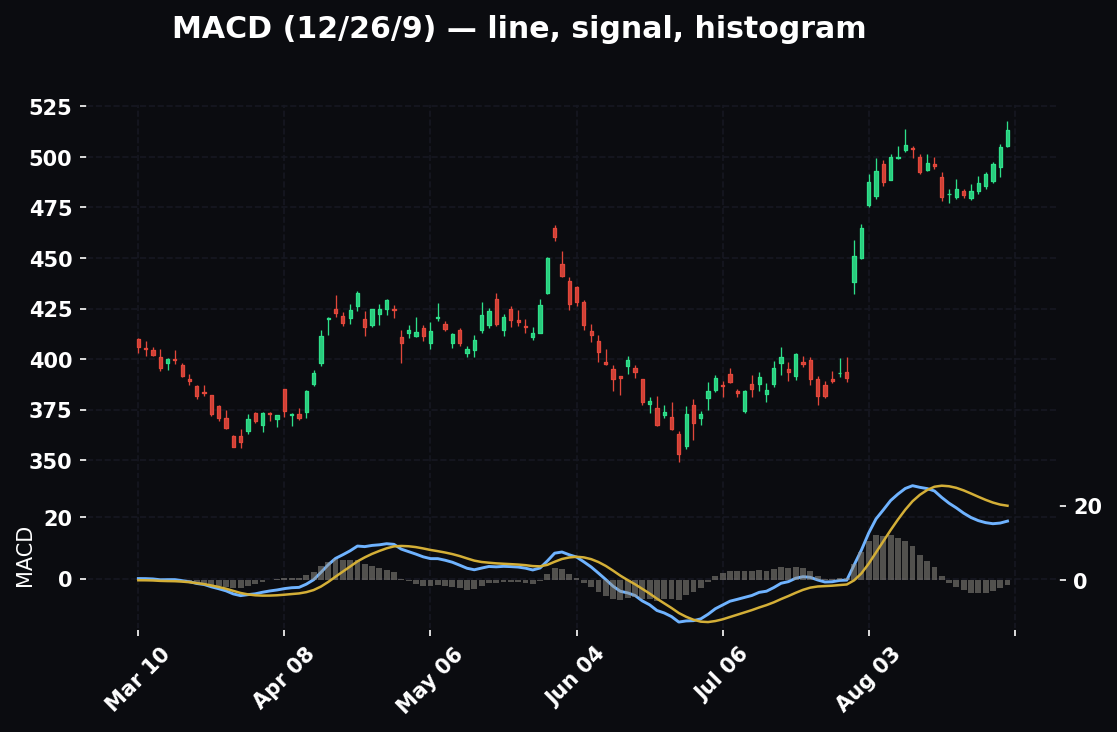
This is the regime that separates disciplined traders from donors. In a fast, high-vol tape — an event, a gap, a squeeze — everything degrades at once. Spreads blow out because makers are terrified of adverse selection (the next order really might know something). Books thin as resting liquidity is pulled. The NBBO becomes a fast-moving target, so the "protection" is against a price that's changing under your feet. Slippage on market orders explodes. Price improvement evaporates.
The rules that follow are non-negotiable in this regime:
- Limit orders only. A market order into a spiking thin tape is the single most expensive click in trading.
- Assume the quote you see is already stale. Price where you'd be happy, not where it just was.
- Size down. Wider stops are forced by the volatility, so smaller size keeps your dollar risk constant. Same discipline, adapted to the regime.
- Respect the open and close. The first and last few minutes carry news-like microstructure every single day — widest spreads, thinnest books, maker nervousness at its peak. Most retail damage happens in those windows.
The illiquid-name regime
Some names are in "high-vol microstructure" all the time simply because they're thin — low float, low average volume, wide baseline spreads. Everything above applies permanently. These names can be traded, but the plumbing tax is a standing cost that has to clear a much higher bar of expected reward. Often the honest answer is: trade the same thesis through a liquid proxy or ETF instead, and let the thin name go.
Multi-Timeframe: Where Microstructure Lives in Your Read
Hollow Point trades multi-timeframe, top-down. Microstructure isn't a timeframe of its own — it's the resolution underneath your lowest timeframe. But it interacts with each level of the read differently, and knowing where it belongs keeps you from mixing signals.
Higher timeframes (daily, weekly): where the levels come from
Your daily and weekly charts and the 12/22/55 EMA structure define bias and levels — the "what" and "where." Microstructure is invisible up here and should be. You don't read the tape to decide the weekly trend. But the levels you draw on these timeframes become the exact places where, later, you'll look for microstructure confirmation. The daily support at $87.80 from Worked Example 2b was a higher-timeframe level; the blocks that confirmed it were microstructure. The higher timeframe asks the question; the plumbing answers it.
The execution timeframe (1m–15m): where the tape becomes usable
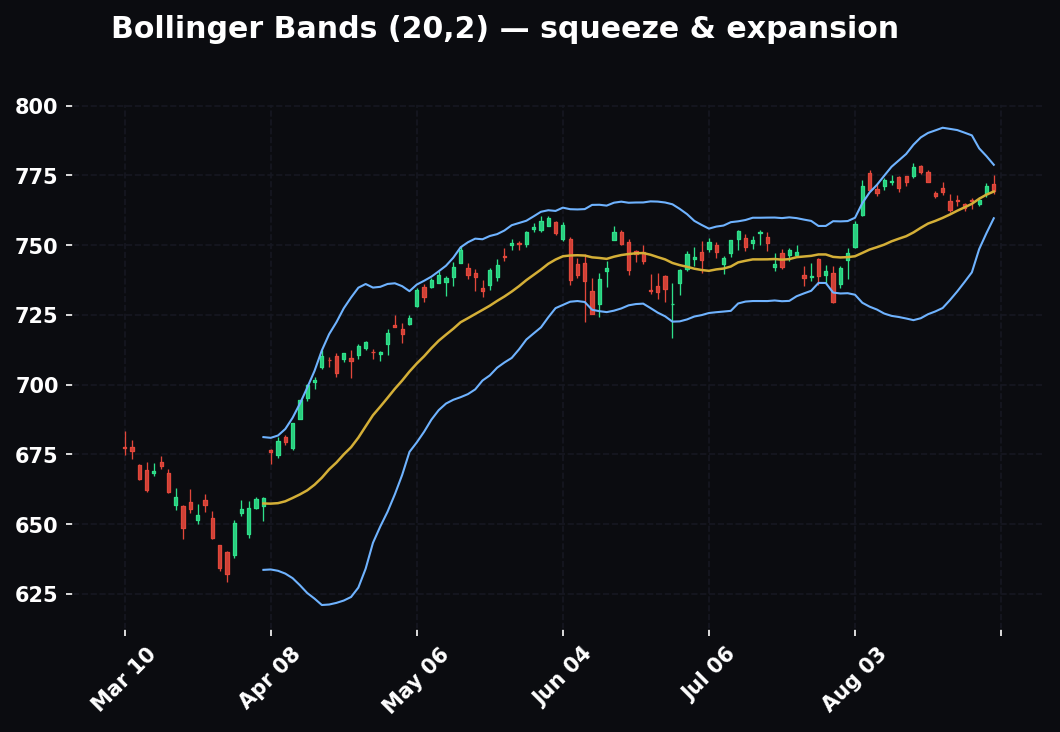
On your entry timeframes, microstructure becomes actionable. Here is where you watch Level 2, the tape, spread behavior, and block prints at the levels your higher timeframes already flagged. This is the discipline: you don't go fishing in the tape for ideas. You bring a level down from above and use the plumbing to grade the quality of the entry there — is the spread reasonable, is size being absorbed in your direction, is the book thick enough that your stop won't get slipped through on a gust.
The mechanical layer (sub-second): where you just protect yourself
Below the 1-minute chart is the raw order-routing layer — the actual fill mechanics. You don't "analyze" this timeframe; you defend against it with order-type discipline. Limit vs. market, working the mid, sizing into the spread. This is pure execution hygiene, and it applies identically regardless of what the higher timeframes say. The best top-down read in the world still gets bled here if the mechanics are sloppy.
The clean mental stack: weekly/daily = bias and levels. 1m–15m = confirmation and timing, read partly through the tape. Sub-second = order mechanics, pure defense. Keep those layers from bleeding into each other and your process stays coherent.
Confluence: Stacking the Plumbing With Your Other Tools
Microstructure is at its most powerful not alone but stacked on the tools you already run. Three combinations earn their place.
Confluence 1: Blocks + drawn levels + the 12/22/55 stack
This is the core Hollow Point stack and we've already seen it in Example 2b. The chart gives you a level and a trend structure; the tape gives you evidence of size defending or attacking that level. When all three align — price at a higher-timeframe level, the EMA stack turning in your direction on the entry timeframe, and institutional-size prints absorbing in your favor — you have three independent sources agreeing. That independence is the whole point. A level, an EMA cross, and a block print don't share a common cause, so when they coincide, the signal is much stronger than any one of them. Timeframe-weighted confluence isn't just about stacking indicators; it's about stacking kinds of evidence, and the tape is a kind most retail never adds.
Confluence 2: Spread behavior + volatility read (VIX / ATR)
Your volatility tools tell you the regime; the spread confirms it in real time on the specific name. If ATR is expanding and the VIX is bid and the name's spread is widening and its book is thinning, that's a coherent high-vol read — trade it with limits, smaller size, wider stops. But if the broad vol read is calm while one name's spread is blowing out, that's name-specific — often news is breaking in that ticker before you've seen the headline. The spread can front-run the news feed. A sudden, isolated spread expansion is a reason to check what's happening in that name right now before you do anything.
Confluence 3: Off-exchange volume + volume profile
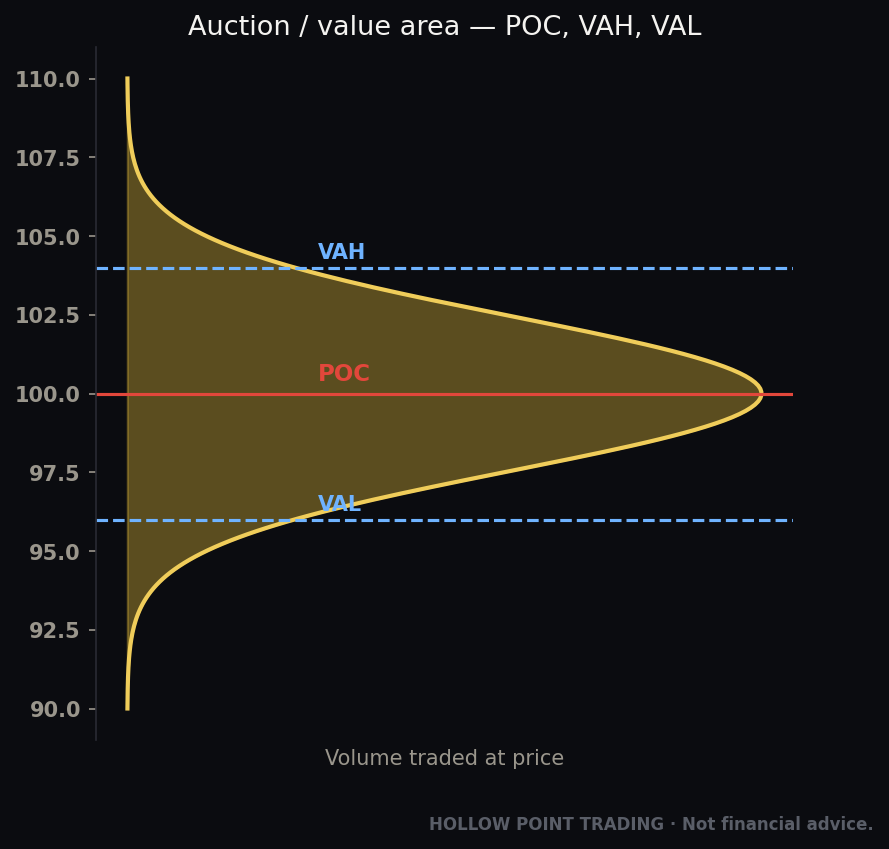
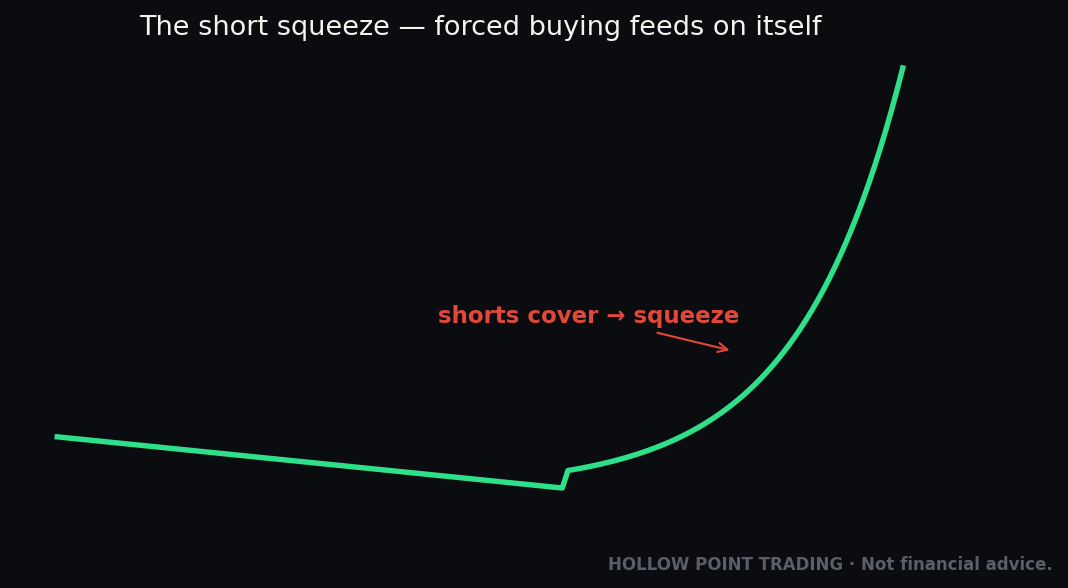
Your volume profile shows where volume has traded and builds your POC, VAH, and VAL. Layering venue onto that adds a dimension: heavy off-exchange (dark) volume at a price node means institutions built that node quietly, which tends to make it a stickier, more defended level than one built on frantic lit volume. A high-volume node that's also a dark-print cluster is a level with institutional conviction underneath it — exactly the kind of level worth trading toward or leaning against. The profile tells you where volume is; the venue data hints at who built it.
How the Pros Use It Differently From Beginners
Same plumbing, opposite relationship to it. The gap is almost entirely in framing and habit.
Beginners personalize it; pros read it as weather. The novice believes the market maker is hunting their stop, that PFOF is a targeted skim, that dark pools are a conspiracy against them specifically. The professional knows the system is indifferent — a set of incentives and mechanics that behave the same for everyone — and reads it the way a sailor reads weather. Not malicious, not personal, just conditions to be respected and used.
Beginners fear the spread's existence; pros price it. The novice either ignores the spread entirely or resents it. The pro treats it as a known cost of doing business, bakes it into every R/R calculation, works the mid to shave it, and screens out names where it's too expensive relative to the edge. The spread isn't an enemy; it's a line item.
Beginners use market orders by default; pros use limits by default. This single habit difference accounts for an enormous amount of the long-run performance gap. The pro reaches for a market order only when immediacy genuinely outweighs price — a stop that must be honored, a thesis-breaking flush they need out of now — and even then only on liquid names. Everywhere else, they work a limit.
Beginners hunt for signals in the tape; pros confirm levels with it. The novice watches time and sales looking for a block to tell them what to do, and jumps on the first big print. The pro brings a level down from a higher timeframe and uses the tape only to grade that pre-existing idea. The tape never generates the trade; it confirms or denies one the chart already proposed.
Beginners obsess over PFOF; pros audit execution quality on things that matter. The novice rails about payment for order flow costing them tenths of a cent. The pro periodically checks their actual fills against the NBBO, notices patterns in slippage, and if they're trading enough size, chooses a broker and order types that match their needs — while spending zero emotional energy on the fractions of a cent PFOF touches.
Beginners think liquidity is free; pros make it a screening filter. The pro's universe is pre-filtered for names where the plumbing is cheap. A great setup on an untradeable stock never makes their list, because they've internalized that execution cost is part of the trade, not separate from it.
Beginners want the plumbing to be simple; pros are comfortable with it being layered. The novice wants one clean rule. The pro holds the whole stack — auction, maker, NBBO, lit/dark, PFOF — as a working mental model and pulls the relevant piece for the situation in front of them. Comfort with the complexity is the edge.
The Common Mistakes
Mistake 1: Believing market makers hunt your stops. They don't know or care about your individual 100-share stop. What's real is that stops cluster at obvious technical levels — just below support, just above the round number — and those pools of liquidity* attract price because filling large orders requires liquidity, and stops are liquidity. It's structural, not personal. The fix isn't to fear the maker; it's to stop placing your stop at the same obvious tick as everyone else. Put it beyond the obvious level, or size so a wick past it doesn't wreck you.
Mistake 2: Using market orders on thin, fast, or news-driven names. This is the single most expensive retail habit, and Worked Example 4 is what it costs. A market order in a wide book hands over the full spread and then slips through levels. Default to limit orders anywhere the spread is more than a cent or two, and always around the open, the close, and news.
Mistake 3: Over-reading dark pool prints. A block print is not a signal to buy. Traders see one big print and jump, assuming they've spotted "smart money." A single print has ambiguous direction and can be a hedge, a portfolio rebalance, an index reconstitution, or an unwind having nothing to do with a directional view. Only clusters at a level, confirmed by price behavior, mean anything.
Mistake 4: Blaming PFOF for your P&L. PFOF costs fractions of a cent on liquid names. If your account is bleeding, it's sizing, discipline, and crossing spreads carelessly — not the wholesaler skimming you. Fixate on the real leaks.
Mistake 5: Ignoring the spread entirely. The opposite error. Traders obsess over commissions (now zero) while paying a spread thousands of times larger on illiquid names. The spread is the fee that never shows up on a statement — and on thin stocks it's the biggest cost you'll pay all day.
Mistake 6: Confusing "dark" with "illegal." Dark pools are regulated ATSs, bound by the NBBO, with post-trade reporting. Off-exchange doesn't mean off the books. Treating half of daily volume as a shadowy conspiracy just blinds you to a legitimate, readable source of institutional footprints.
Mistake 7: Trading pre-market and after-hours like it's regular hours. Outside regular hours, the NBBO protection is thin, spreads are enormous, and books are skeletal. A market order at 5:00 a.m. on an earnings reaction can fill absurdly far from the last print. If you must trade the session, limits only, tiny size, and assume every quote is stale.
Mistake 8: Confusing the last price with available liquidity. A stock "at $88" is not a stock where you can buy 5,000 shares at $88. The last print was one handshake; your size might walk far up the book. Always check depth before assuming the displayed price is a price you can actually get in size.
Mistake 9: Chasing the fill and inverting your process. The moment you send a market order because you're afraid of missing a move, you've let emotion pick your order type. That fear is exactly when slippage is worst, because the move that's scaring you is the same move thinning the book. The discipline is to have your limit set before the level triggers, so the plan executes the order, not the panic.
Mistake 10: Assuming a tight spread means it's safe to size up. A one-cent spread on the top of book can hide a thin ladder underneath. In fast conditions a name can show a penny spread for 200 shares and nothing behind it. Tight top-of-book is necessary but not sufficient; check depth, especially before larger orders.
Mistake 11: Reading a midpoint print as directional. Because dark pools frequently match at the NBBO midpoint, a huge block printing right between bid and ask tells you size traded but is close to directionally neutral by construction. Traders who assume every big print is a "buy" or a "sell" are inventing a direction the print doesn't carry.
Mistake 12: Never checking your own fills. The only way to know if your execution is good is to compare your fills to the NBBO at the time and track your slippage over many trades. Traders who never audit their fills have no idea whether their order-type habits are costing them, and can't improve what they don't measure.
FAQ
Q: Is payment for order flow the reason I lose money? No. On the liquid names most retail trades, PFOF's impact is tenths of a cent per share, and you often receive small price improvement on top. Losses come from sizing, discipline, and crossing spreads carelessly. Direct your attention to those.
Q: Are dark pools illegal or rigged against retail? No. They're regulated Alternative Trading Systems, bound by the same NBBO your order is, with mandatory post-trade reporting. "Dark" means orders aren't displayed before they execute — it does not mean unregulated, secret forever, or off the books. Their purpose is letting institutions move size without stampeding the visible market.
Q: Do market makers actually hunt my stop? Not you specifically — they have no idea where your individual stop is. But stops cluster at obvious levels, and those clusters are pools of liquidity that price is drawn toward, because large orders need liquidity to fill. It's structural, not personal. Place your stops away from the crowd's obvious tick.
Q: Should I switch to a broker with no PFOF? For most retail size, the difference is negligible and free commissions are worth more than the fractions of a cent involved. If you trade large size or very actively, a broker offering direct market access and smart order routing may give you better control and execution — worth evaluating then. Check your broker's Rule 606 disclosures if you want the actual numbers.
Q: When should I ever use a market order? When immediacy genuinely matters more than price, and only on liquid names: honoring a stop, exiting a thesis-breaking move fast, or getting into a fast-moving liquid name where a few cents won't change the trade. Everywhere else — thin names, wide spreads, news, the open and close — use limits.
Q: How do I even see dark pool prints and off-exchange volume? Off-exchange prints appear on time and sales, often with a venue/exchange code (many platforms tag them or let you filter). Aggregate off-exchange volume by name is published; some tools surface "dark pool" indicators built on it. Treat all of it as evidence of where institutional size traded, not as a direct buy/sell signal.
Q: What's the single highest-value habit from all this? Defaulting to limit orders and only reaching for a market order when immediacy truly outweighs price. That one habit prevents the largest, most common execution leak in retail trading.
Q: Does a tighter spread always mean a better stock to trade? Tighter is cheaper to enter and exit, yes, but check the depth behind the top of book too. A penny spread with nothing underneath can still slip you in size or in fast conditions. Spread and depth together tell you the real liquidity.
Q: The tape shows a giant block — should I follow it? Not on its own. One block is ambiguous in direction and can be a hedge, a rebalance, or an unwind. Wait for a cluster at a level, and confirm with how price behaves there. A single print is noise; a defended cluster is signal.
How It Fits the Top-Down Process
At Hollow Point we trade macro → sector → stock, top-down: read the environment, find the strong sector, isolate the right name, then time the entry with timeframe-weighted confluence and the EMA 12/22/55 trend structure. Where does the plumbing live in that stack? At the very bottom — and it's decisive there.
Your macro read tells you what. Your sector read tells you where. Your technical read on the daily and the 12/22/55 stack tells you the bias and the level. But the fill — the actual execution — is where a good analysis either gets kept or gets bled away. You can be right about direction and still lose to the spread, to slippage, to a market order in a thin book at 9:31 when spreads are widest.
So execution is the final filter on every idea:
- Liquidity screens the universe. If a name's spread is chronically wide and its book is thin, it's a worse vehicle for the same thesis than a liquid peer. Top-down should prefer names where the plumbing is cheap. A great setup on an untradeable stock is not a great trade.
- Venue awareness informs the tape. When you're reading price action at a key level, knowing whether large off-exchange prints are hitting tells you if institutions agree with your level. That's confluence from the plumbing itself — an independent read stacked on your EMAs and your fibs.
- The spread is part of your risk math. Your 1:3 R/R is calculated after the cost of entry, not before. Baking the spread and realistic slippage into the entry price is the difference between a backtested 1:3 and a live 1:2.4 that slowly erodes your edge.
Execution isn't separate from the analysis. It's the last, unforgiving link — where being right on paper becomes being paid in the account.
The Cheat-Sheet
Print this. Tape it next to the monitor.
The auction
- Bid = highest price buyers will pay. Ask/offer = lowest price sellers will take. Spread = the gap = the market maker's pay and your hidden cost.
- The order book (DOM / Level 2) is the real market. The last price is just the most recent handshake — not a price you can necessarily get in size.
Order types
- Market order = fill now at any price; you take liquidity and pay the spread (and any slippage). Guarantees execution, not price.
- Limit order = fill only at your price or better; you can provide liquidity. Guarantees price, not execution.
- Default to limits. Reach for market orders only when immediacy beats price, and only on liquid names.
- Work the mid on moderately wide spreads to buy the spread in half.
Market makers
- Always quote both sides; earn the spread; manage inventory risk and adverse selection.
- Wide spread = maker is nervous (volatility, news, thin book). It's a signal, not an attack.
- Quote skew and a repeatedly-refreshing offer/bid = someone leaning on the level. Watch what happens when it lifts.
The NBBO
- The National Best Bid and Offer — best bid + best ask across all lit exchanges.
- You're legally owed a fill at or inside the NBBO. It's the yardstick every fill is measured against.
- It's a price floor, not a size guarantee, and it thins out pre-market, after-hours, and in fast tapes.
Lit vs. dark
- Lit = public exchanges, visible book, where price is discovered.
- Dark = private ATS, hidden pre-trade, where institutional size hides; prints to the tape after execution. ~40-50% of volume trades off-lit.
- Dark pools consume the lit price (usually match at midpoint); they don't create it. Regulated, reported, legal.
PFOF & internalization
- Your order is often sold to a wholesaler (Citadel Securities, Virtu) who fills you internally at/inside the NBBO and pays your broker.
- You get free commissions + tiny price improvement; they get safe, non-toxic retail flow. Costs you a sliver of a cent — noise.
Regimes
- Trend = friendly plumbing, cheap execution; don't get lazy.
- Chop = work the mid, read absorption at range edges.
- High-vol / news = limits only, quote is stale, size down, respect the open and close.
- Thin names = permanent high-vol microstructure; often trade the thesis through a liquid proxy instead.
Reading it
- Spread as % of price: liquid = cross it; thin = respect it, use limits.
- Block print = institutional interest at a level, ambiguous direction (midpoint prints are near-neutral). Cluster + price behavior = signal. One print = noise.
- Price improvement on your fill = the plumbing working. Best on liquid names, worst on thin ones.
- Isolated spread blowout in one name = news may be breaking before the feed. Check it.
Rules that follow
- Limit orders on wide/fast/news names. Market orders only where the spread is a penny and immediacy matters.
- Bake spread + realistic slippage into entry before claiming your 1:3 R/R.
- Prefer liquid vehicles for the same thesis. A great setup on an untradeable stock isn't a trade.
- Don't put your stop on the same obvious tick as the whole crowd.
- Bring levels down from higher timeframes; use the tape to confirm, never to generate ideas.
- Audit your own fills against the NBBO periodically; measure your slippage or you can't fix it.
The Real Lesson
The plumbing isn't rigged against you — it's indifferent to you, which is a very different thing. Market makers aren't hunting your stops; they're managing inventory. Wholesalers aren't stealing from you; they're buying your flow because it's clean. Dark pools aren't hiding manipulation; they're hiding size. The NBBO is a genuine protection you carry into every trade whether you know it or not.
Fear comes from the dark. Once you can see the machinery — the auction, the spread, the routing, the prints — it stops being a threat and starts being information. You read the spread and know how nervous the maker is. You read the block prints and know where the elephants stepped. You read the regime and pick the order type that survives it. You read your own fill and know the system did its job. And you build all of it into the last link of your top-down process, where being right becomes being paid.
That's the whole point of learning the plumbing: not to become a plumber, but to stop being afraid of the pipes — and to trade the flow with the same discipline you bring to the chart. The trader who fears the machinery hesitates, oversizes out of frustration, blames the wholesaler, and clicks market orders into spikes. The trader who understands it prices the spread, works the mid, brings levels down from above, confirms with the tape, and keeps the edge the chart earned all the way into the account. Same market. Same pipes. Opposite outcomes — decided entirely by which one you choose to be.
Bound by rules, feared by trade.